
Dull, aching pain along the inner shin that creeps in during runs or long walks is a hallmark of shin splints—also known as medial tibial stress syndrome (MTSS). At The PT Zone, we dial down tibial irritation, correct lower‑leg mechanics, and guide smart training so you can rack up miles without the sting.
- Ease shin soreness and prevent progression to stress fractures
- Improve calf and ankle flexibility for smoother shock absorption
- Strengthen foot, hip, and core muscles to balance leg loading
- Optimize running cadence, footwear, and surface choices
Run Farther—
Free from Shin Pain
Shin splints develop when repetitive impact overloads the tibia and surrounding musculature, causing micro‑trauma where muscles and periosteum meet the bone. Factors like rapid mileage increases, hard surfaces, worn shoes, and over‑pronation magnify stress along the medial shin. Early aches are often brushed off until the burn forces a mid‑run stop. At The PT Zone we begin with a detailed running and activity history, examining stride length, cadence, foot strike, and hip control. We also assess ankle dorsiflexion, calf tightness, and arch stability—common culprits behind MTSS. Understanding these root contributors allows us to tailor interventions that relieve pain quickly and address the overload cycle for the long term.
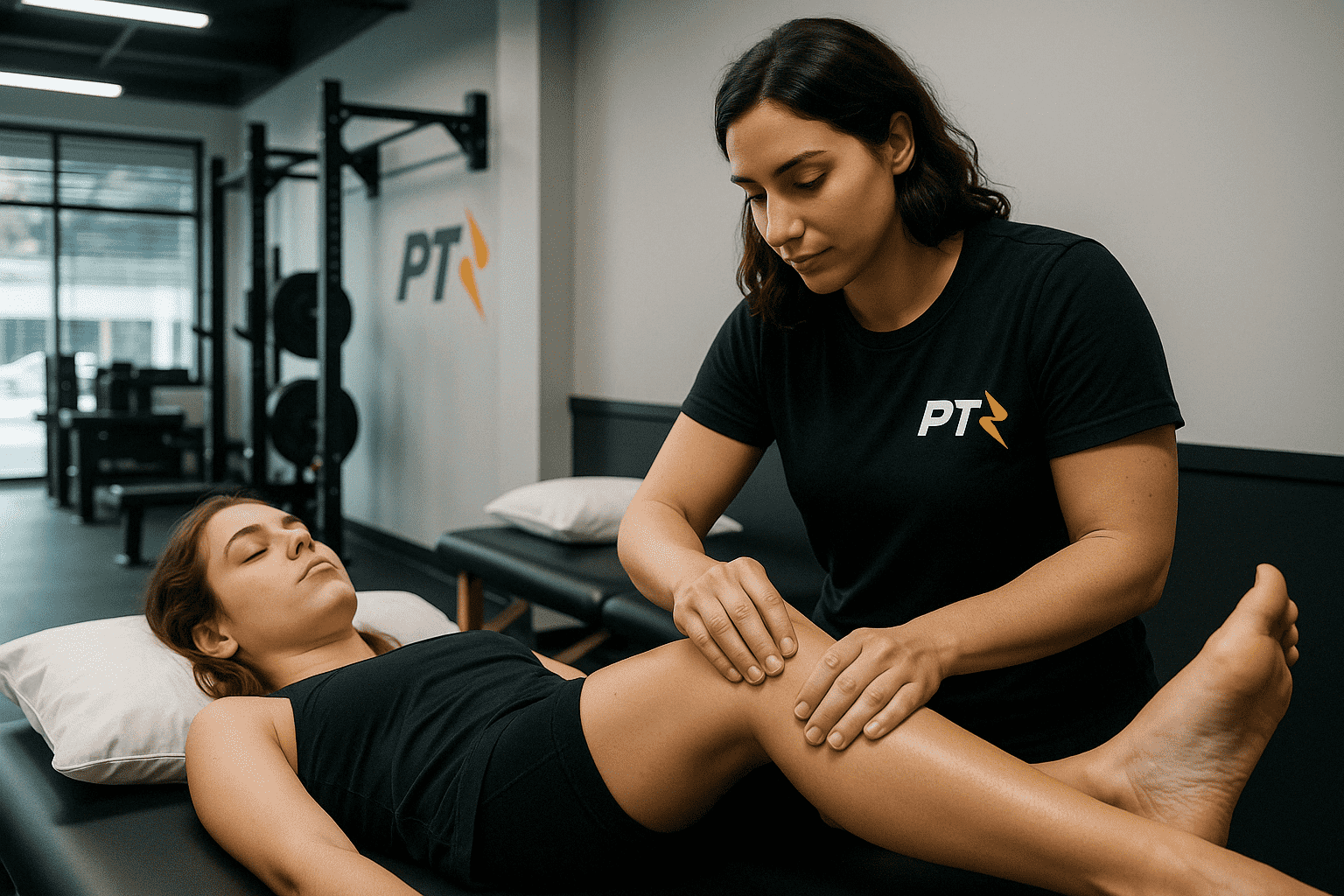
Initial care focuses on pain modulation and tissue unloading. Soft‑tissue release to deep posterior compartment muscles reduces tension on the tibia, while gentle calf and soleus stretches restore length without provoking symptoms. Ice massage and compression sleeves calm inflammation, and temporary activity modifications—shifting to elliptical or pool runs—maintain cardio fitness as bone stress settles. Many runners notice a drop in post‑run soreness within the first week as local swelling subsides and tissues decompress.
With pain under control, we progress to graded loading. Eccentric heel drops, resisted toe curls, and arch‑doming drills strengthen the tibialis posterior and intrinsic foot muscles, improving shock absorption. Hip‑abductor and core circuits level the pelvis, curbing knee‑in collapse that amplifies tibial stress. We then refine running mechanics: cueing a shorter stride with cadence near 175–185 spm, teaching mid‑foot landings on varied surfaces, and ensuring shoes match the runner’s foot type and mileage demands. A stepwise return‑to‑run plan—often beginning with run‑walk intervals—builds volume safely while monitoring for any shin tenderness.
Graduation from our program means logging distance comfortably, knowing how to manage training loads, and owning a quick mobility‑strength routine that keeps medial tibial stress syndrome from resurfacing. Your shins should power you forward, not hold you back.
Our Therapies for Shin Splints (MTSS):
Tissue‑release techniques, calf‑foot strengthening, cadence and stride coaching, footwear guidance, and progressive run programming—everything you need to outrun shin pain.
-
Balance Training
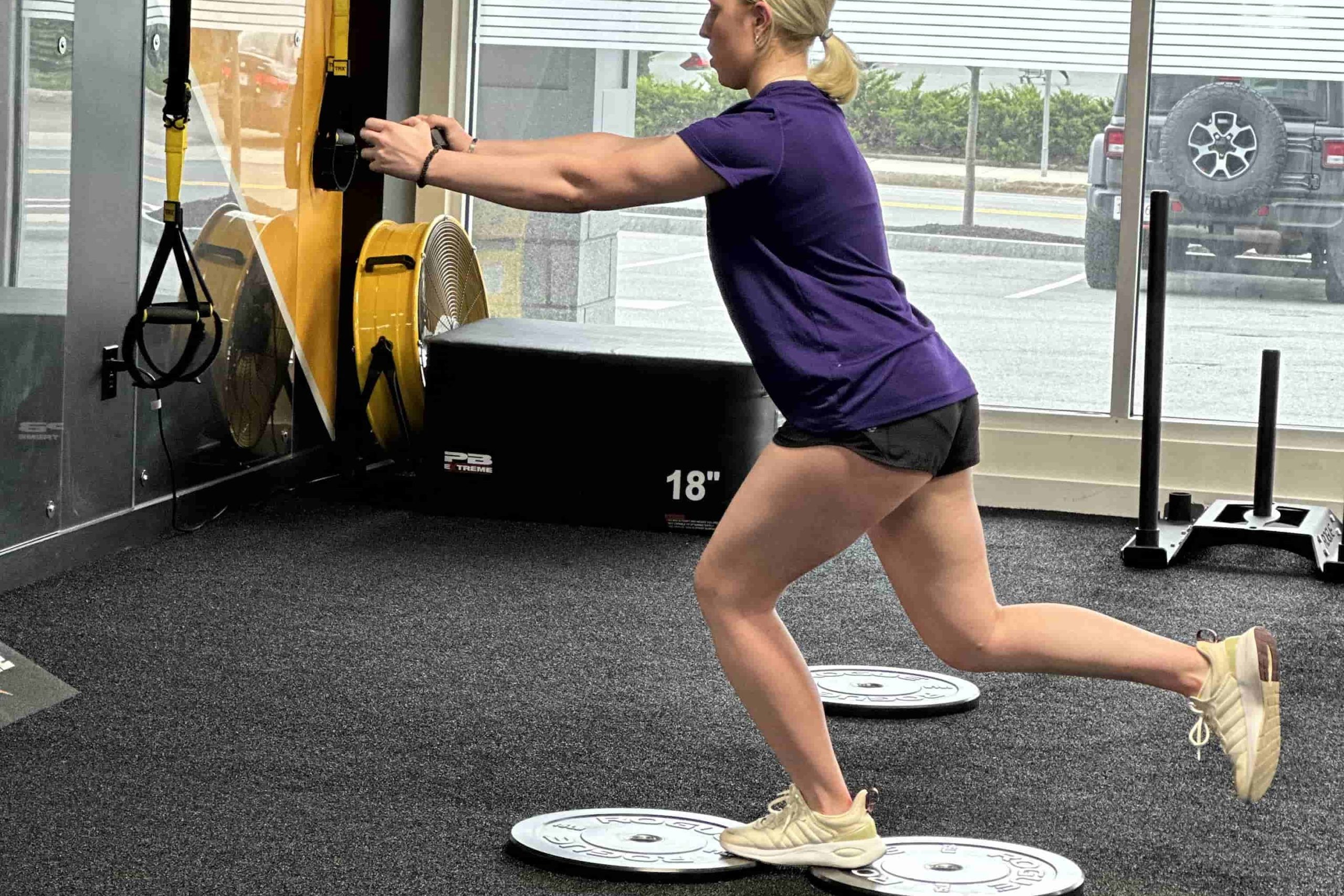
Balance Training is a specialized approach that strengthens stabilizing muscles, enhances coordination, and reduces fall risks, ultimately improving posture and promoting confident movement.
-
Certified Manual Therapy
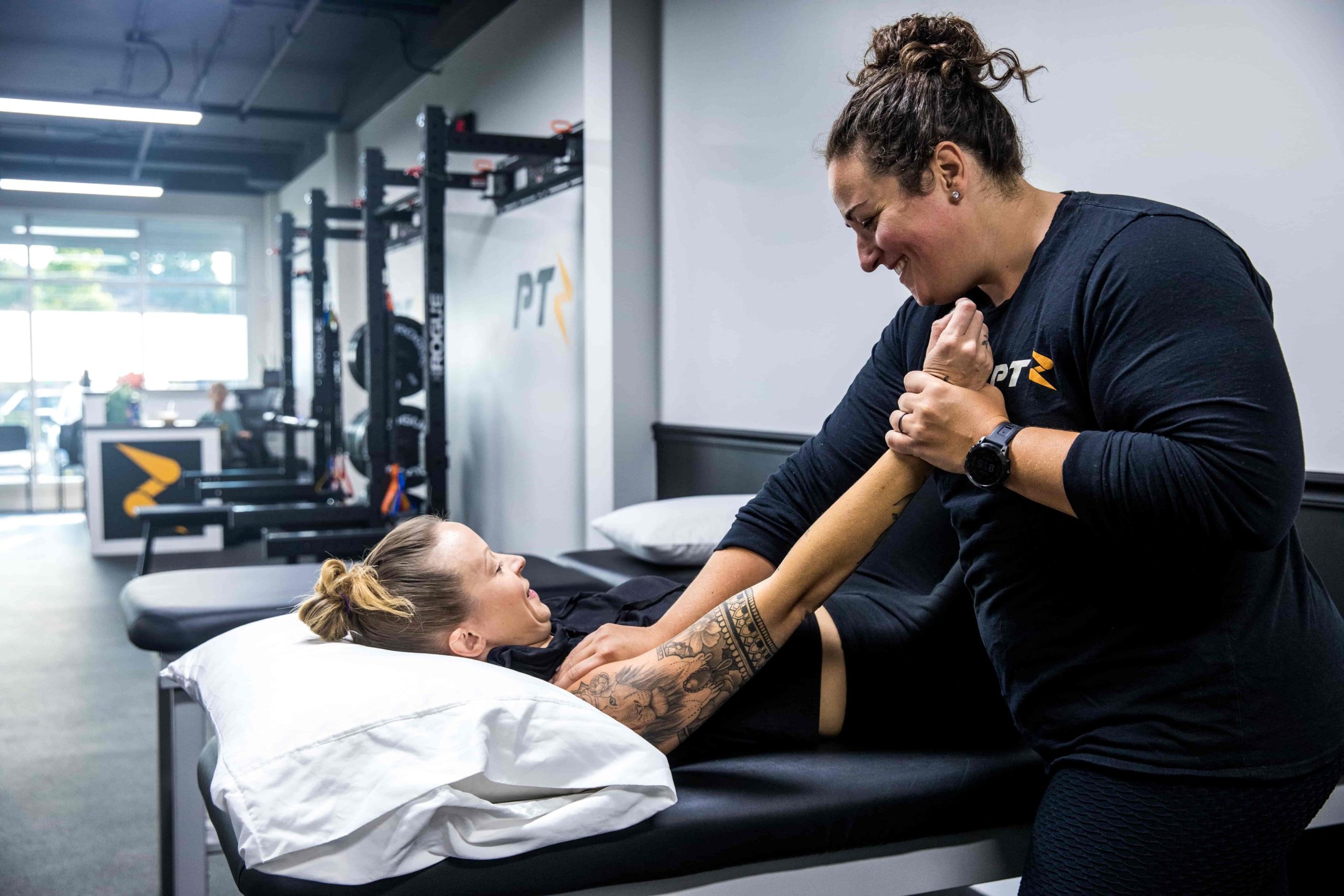
Certified Manual Therapy is a hands-on approach that addresses joint, muscle, and connective tissue dysfunction, reducing pain, improving alignment, and promoting faster, more efficient recovery.
-
Cupping
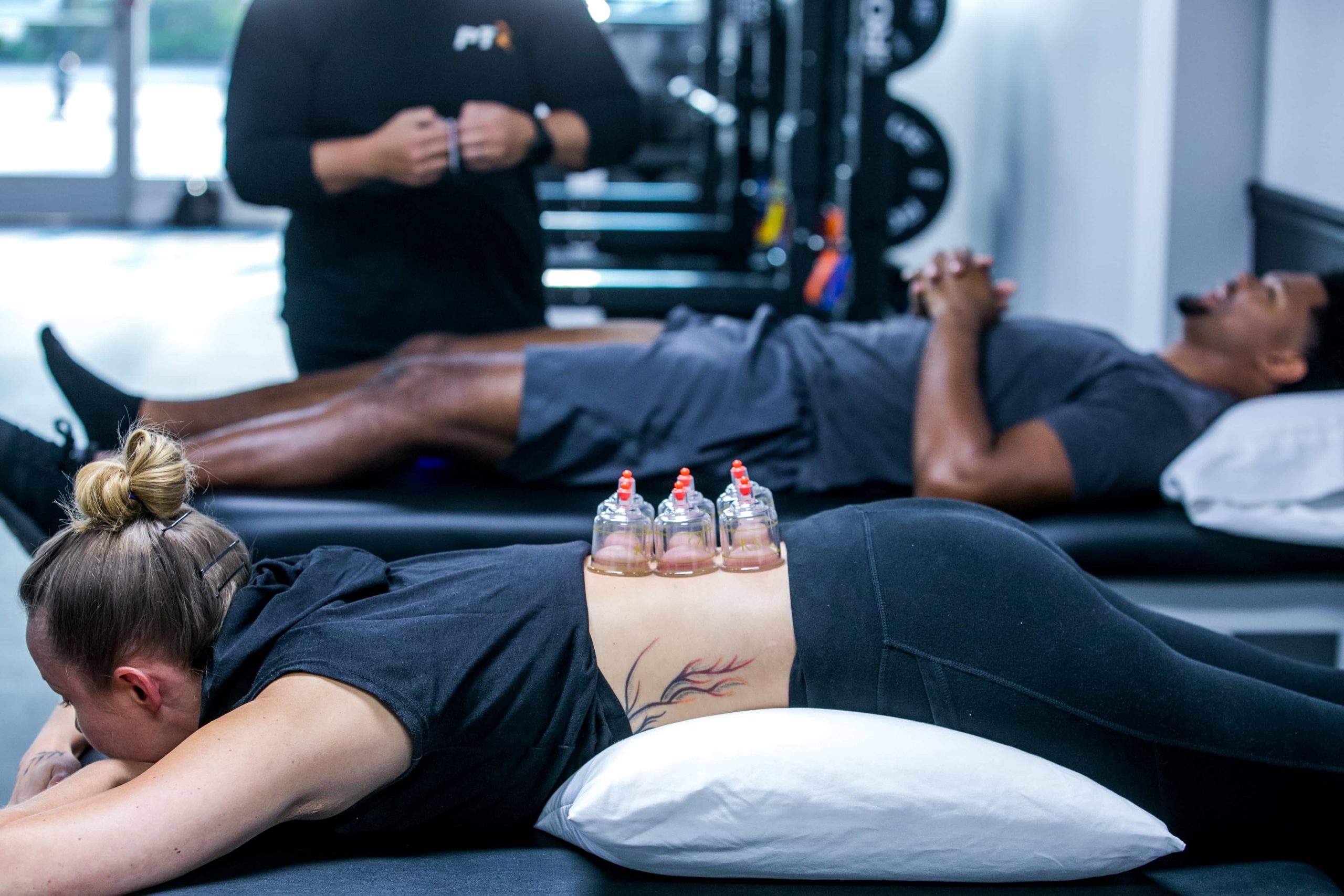
Cupping therapy is an ancient healing technique that uses suction to enhance circulation, relieve muscle tension, and promote the body’s natural recovery process.
-
Dry Needling
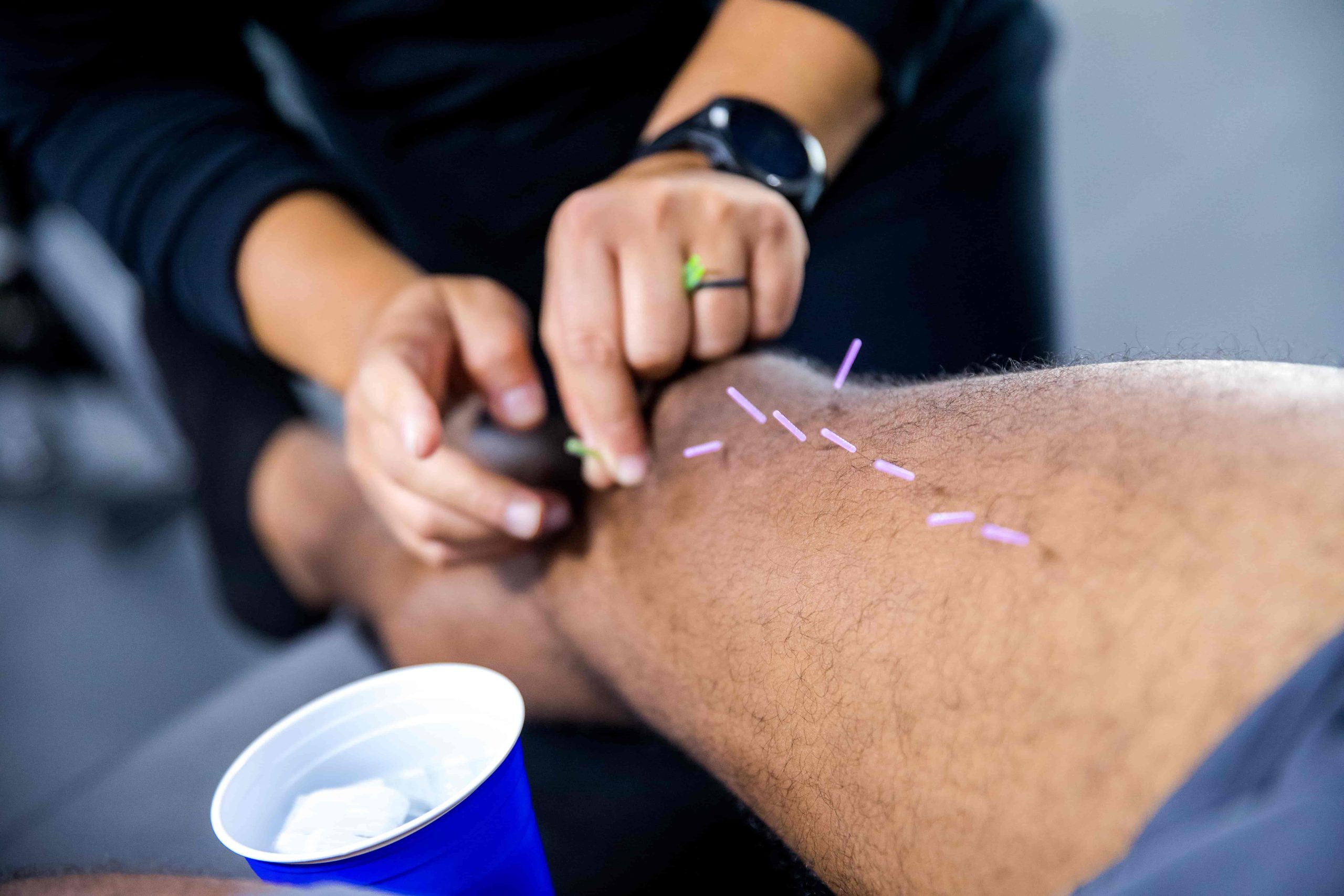
Dry needling is a modern therapy that targets muscle trigger points with thin needles to relieve pain, reduce tension, and restore mobility.
-
Gait Training
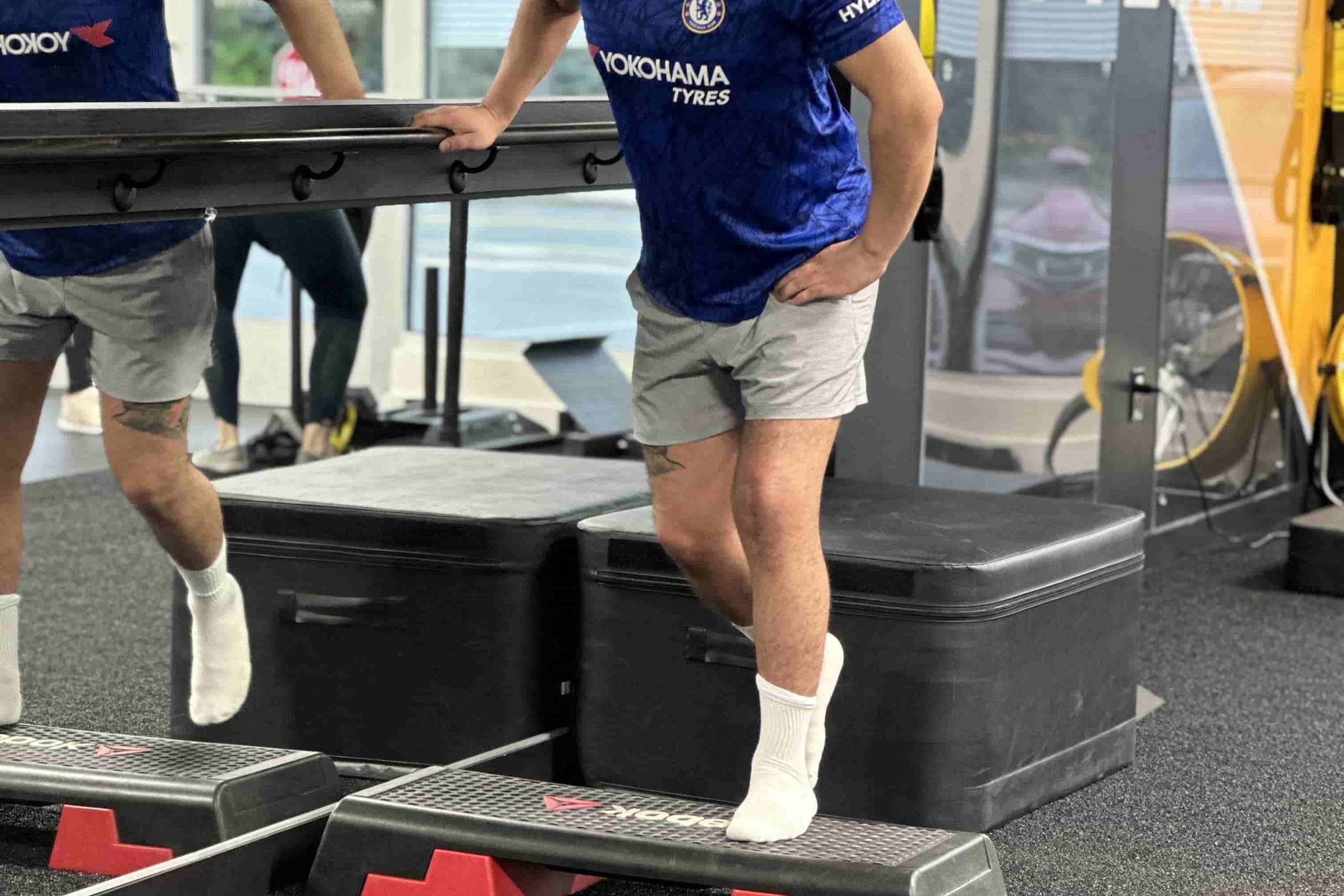
Gait Training is a specialized approach that enhances walking mechanics, improves lower-limb strength, and reduces re-injury risks, ultimately promoting more efficient movement.
-
Graston Technique
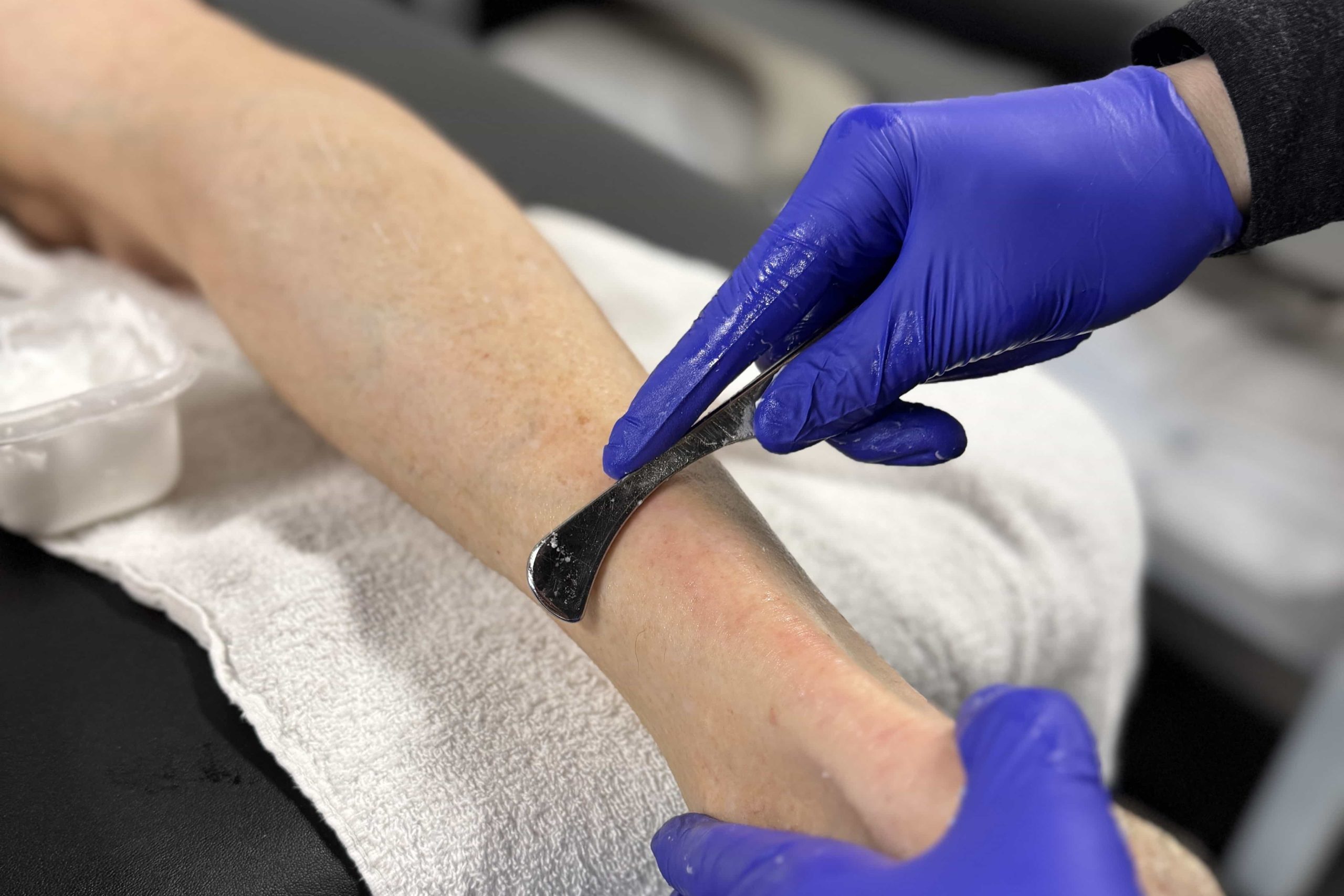
Graston Technique is a specialized manual therapy that uses stainless steel instruments to break down scar tissue, improve mobility, and accelerate healing.
-
Kinesiotaping
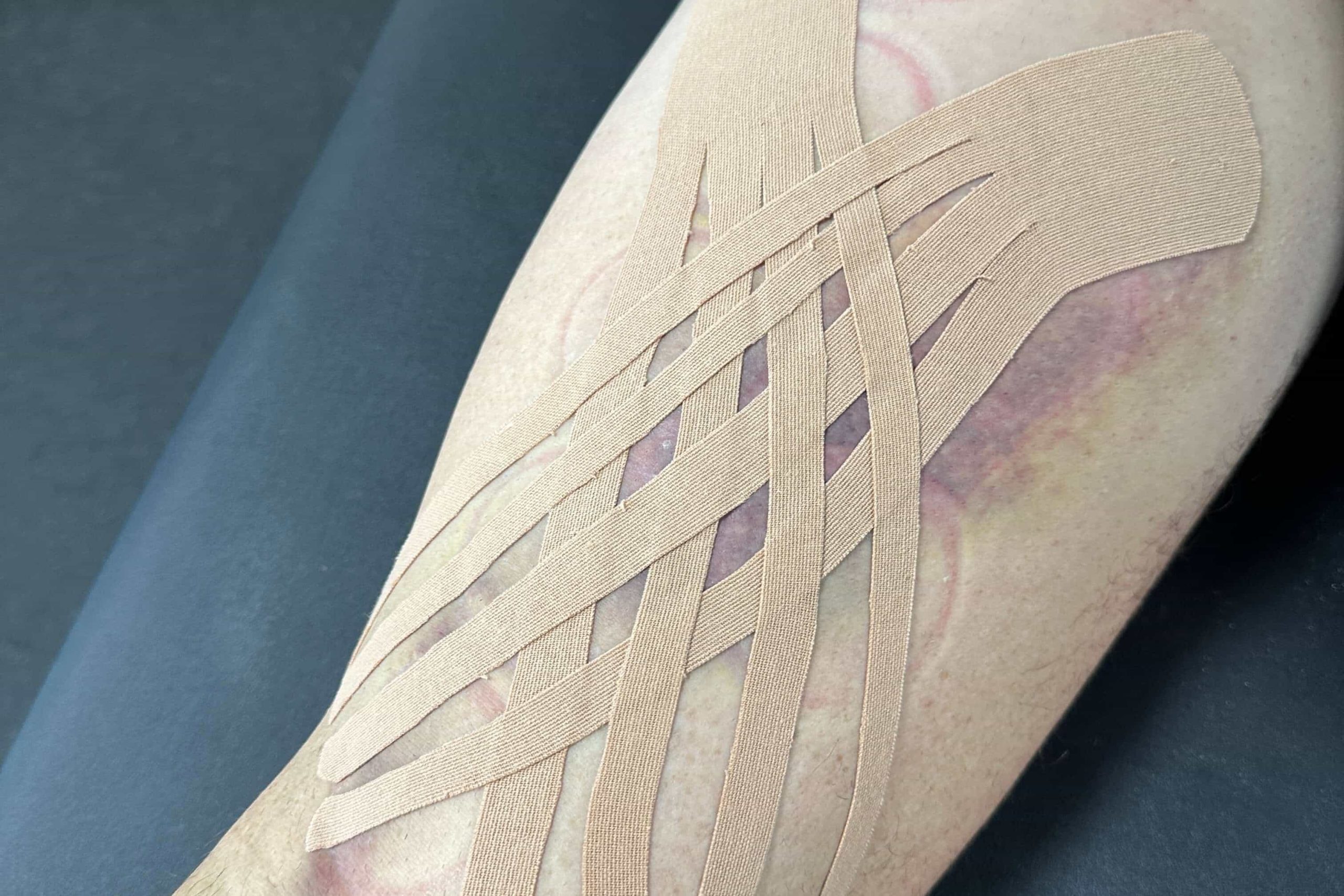
Kinesiotaping is a flexible taping method that provides gentle support, improves circulation, and helps maintain natural movement for a more comfortable and effective recovery.
-
Manual Traction
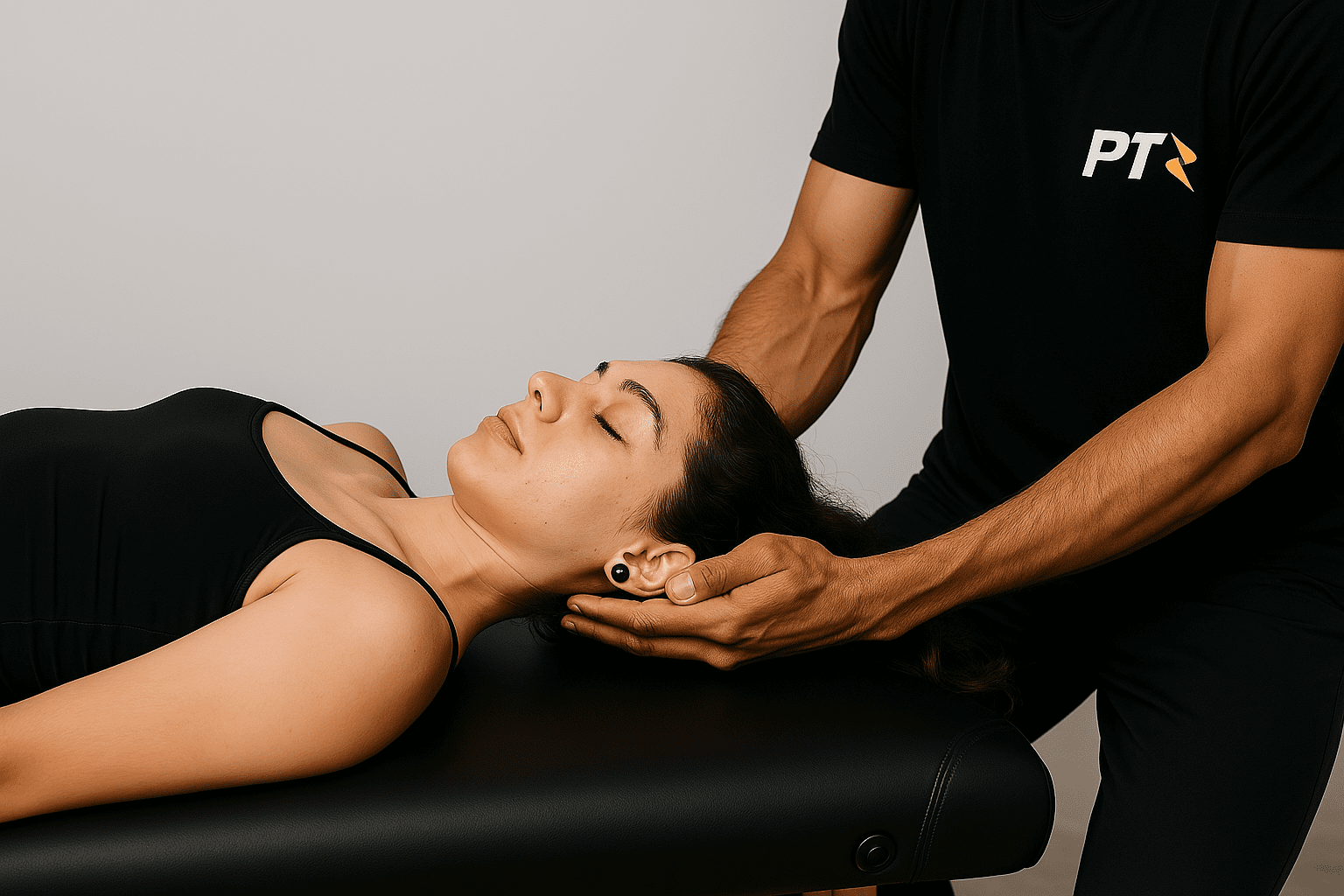
Manual Traction is a gentle, hands-on method used to decompress the spine, relieve pressure on discs and nerves, and improve overall comfort and mobility.
-
Post-Surgical Rehab
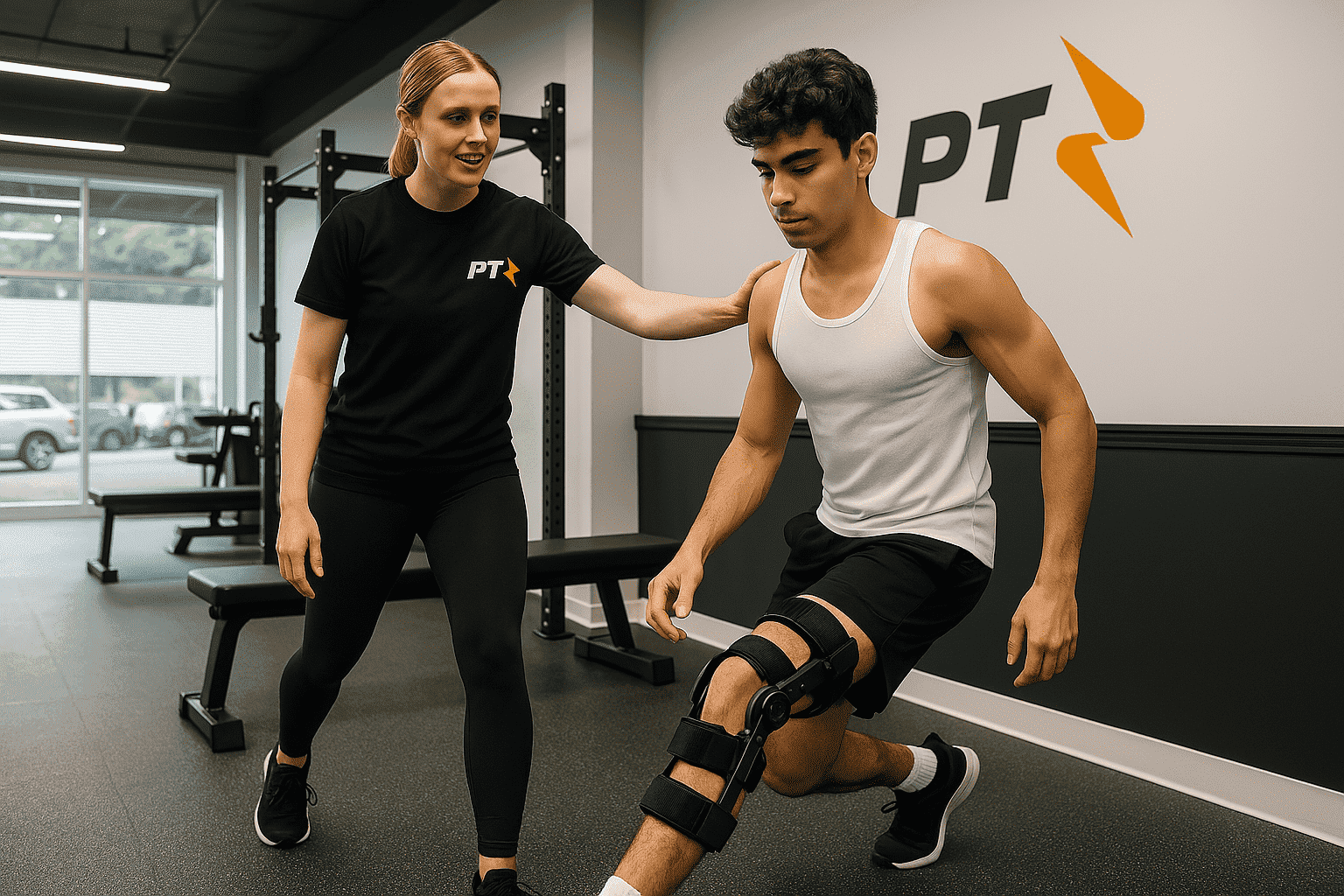
Post-Surgical Rehab is a structured recovery process designed to restore mobility, manage pain, and rebuild strength after surgery, ensuring a safer and faster return to your everyday activities or sports.
-
Physical Therapy for Weightlifters & CrossFit
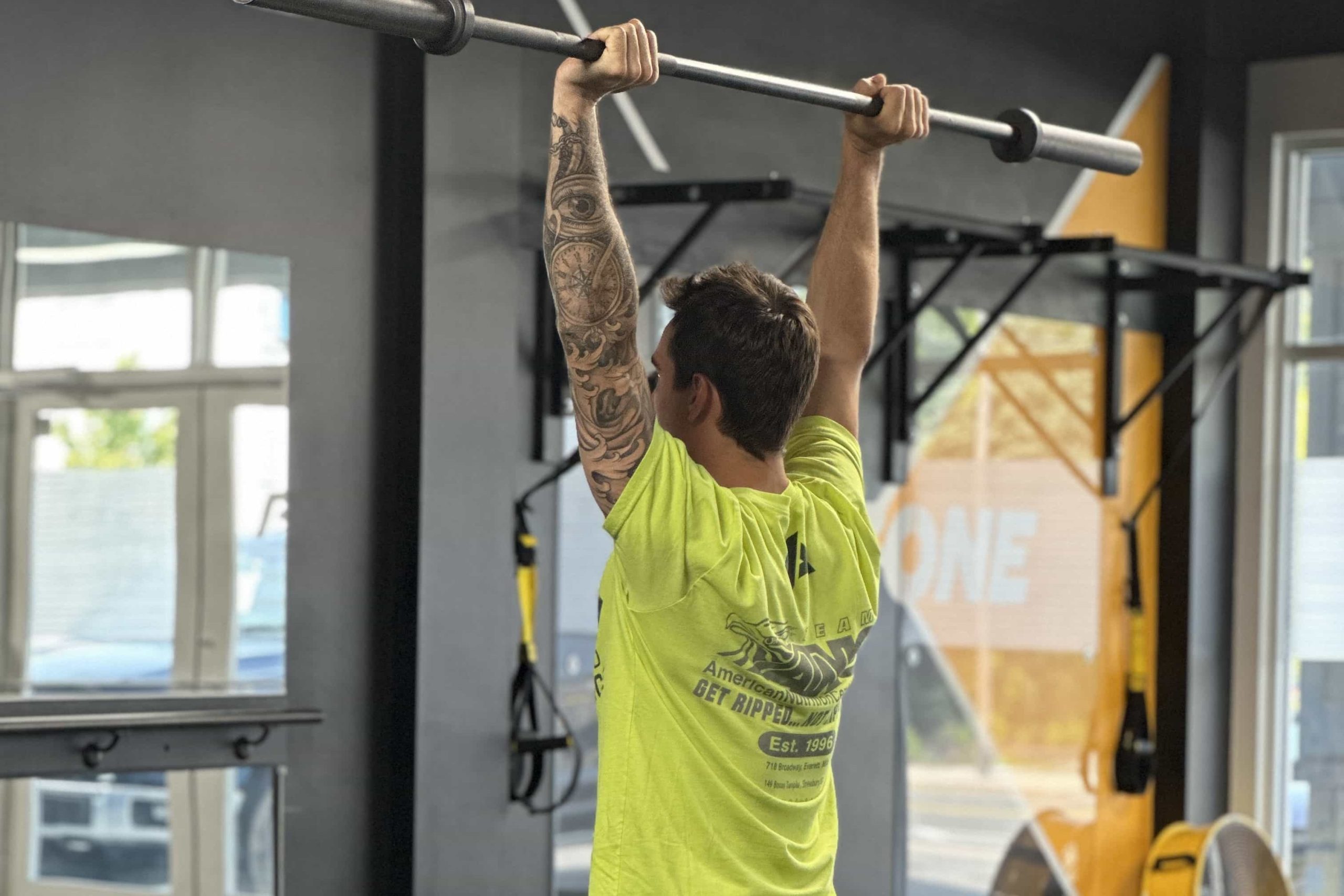
Physical Therapy for Weightlifters & CrossFit focuses on proper lifting mechanics, correcting muscle imbalances, and managing stress on joints to prevent pain, accelerate recovery, and enhance overall strength gains.
-
Physical Therapy For Runners
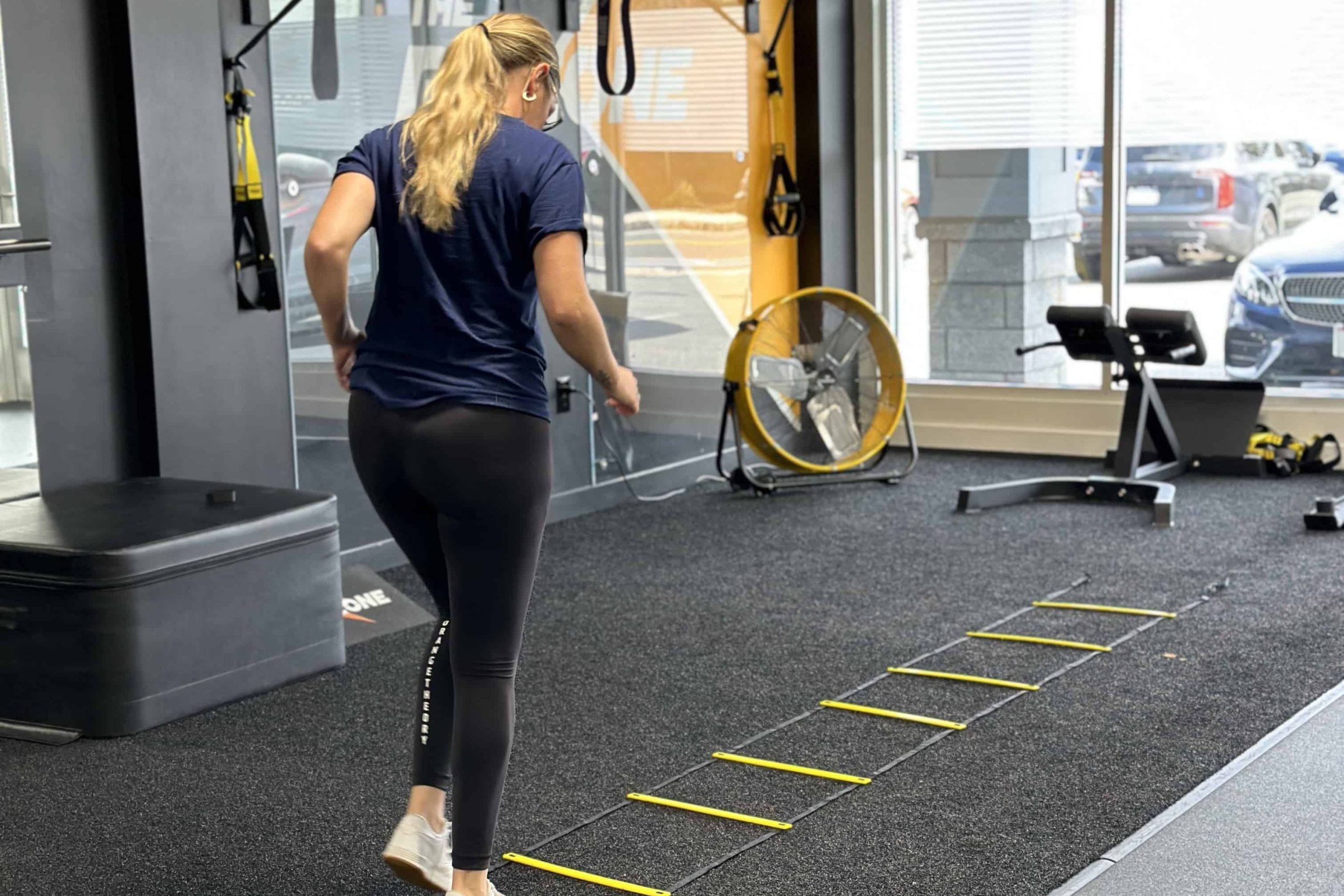
Physical Therapy for Runners focuses on refining running form, addressing muscle imbalances, and enhancing lower-limb stability to prevent injuries and boost performance.
-
Neuromuscular Massage Therapy
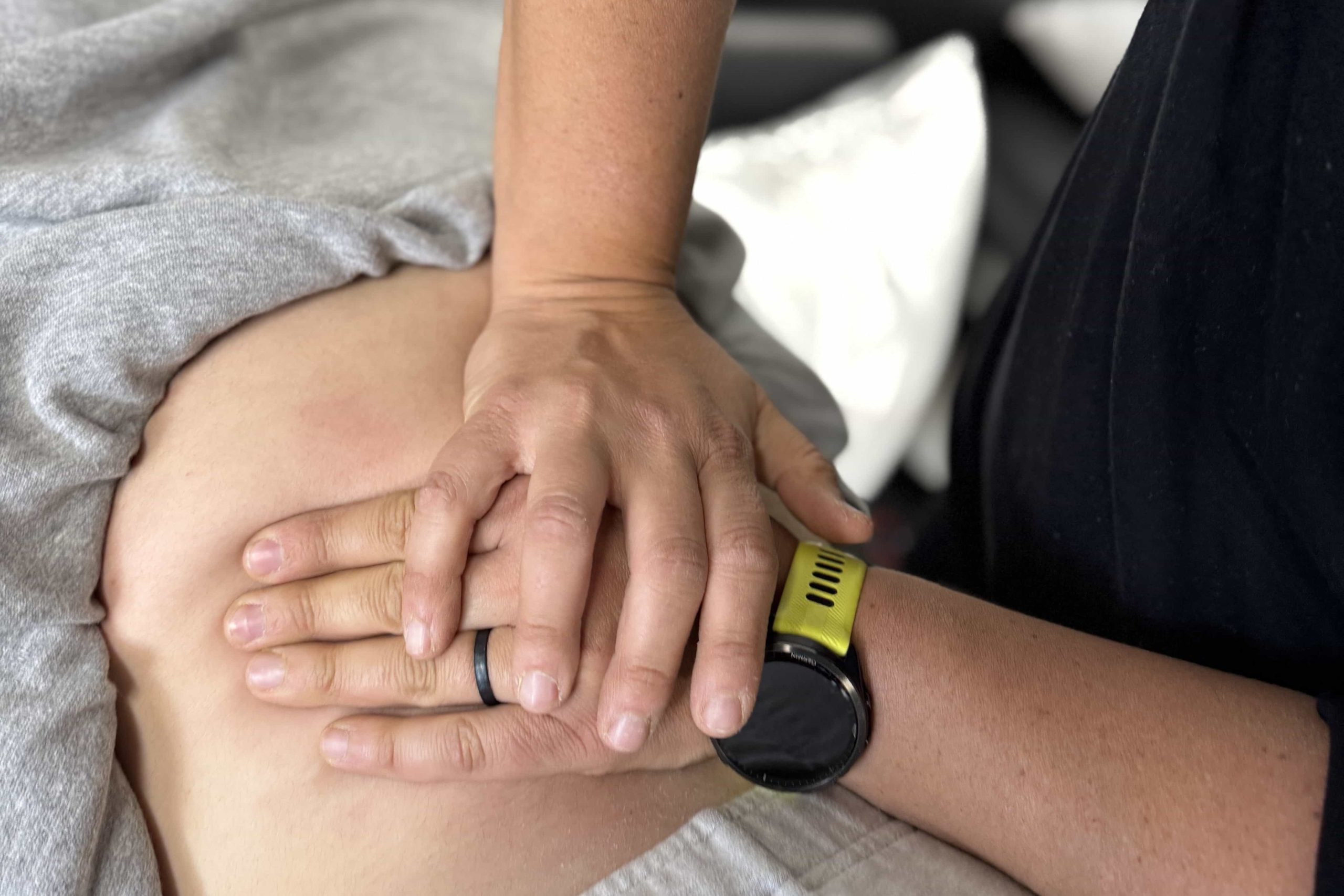
Neuromuscular Massage Therapy (NMT) precisely targets trigger points in muscles and connective tissues, relieving tension, restoring proper function, and promoting long-term pain relief.

The PT Zone is committed to long‑term relief—so every stride feels strong and pain‑free.
Our step‑by‑step approach transforms shin splints into solid shins—letting you chase PRs, not pain.
Common Questions from Shin Splints Clients
1. How are shin splints different from a stress fracture?
Shin splints cause diffuse tenderness along a broad section of the medial shin and ease as you warm up, whereas stress fractures create pinpoint pain that worsens with load and may ache at rest. Hop tests and tuning‑fork vibration help us differentiate, but imaging rules out fractures if symptoms persist despite care.
2. Should I stop running completely?
Not necessarily. We use a pain‑monitoring model: if discomfort stays below 3/10 during and after activity, modified running—often on softer surfaces and shorter intervals—can continue while rehab begins. Higher pain levels call for a brief cross‑training phase to protect the bone.
3. Do compression sleeves really help?
Calf sleeves provide proprioceptive feedback and mild vibration dampening, which can ease soreness during runs. They’re a useful adjunct but work best with stretching, strengthening, and cadence adjustments.
4. How long before I can race pain‑free?
Most runners feel substantial relief within 3–4 weeks of targeted therapy and mileage adjustments. Building back to race‑distance volume often takes 6–8 weeks, depending on baseline strength and how quickly tissue tolerance rebuilds.
5. Will new shoes fix shin splints?
Fresh shoes with proper cushioning reduce impact, but mechanics and training errors must be addressed too. We match footwear to your stride and mileage, then pair it with strength and cadence work for lasting results.
6. Is foam rolling the shins safe?
Direct rolling on the bone can aggravate symptoms. We focus on calf, soleus, and anterior tibialis rolling instead, which eases muscle tension without pressing on the inflamed periosteum.
7. How do I keep shin splints from coming back?
Progress mileage by no more than 10 % weekly, rotate shoes, keep calves flexible, and maintain a cadence above 170 spm. Regular single‑leg strength and balance drills distribute forces evenly and flag small imbalances before they irritate the tibia.